Leaking when you sneeze. Pain during sex. A core that never came back after the baby. Most people are told some version of "that's just what happens," after kids, after 50, after surgery. It isn't. Pelvic health therapy treats all of it, and most people have no idea it exists.
What Pelvic Health Therapy Actually Is
Your pelvic floor is a group of muscles that sits at the base of your pelvis. It supports your bladder, bowel, and reproductive organs, helps control when you go to the bathroom, and works with your deep core and diaphragm every time you breathe, lift, or stand up.
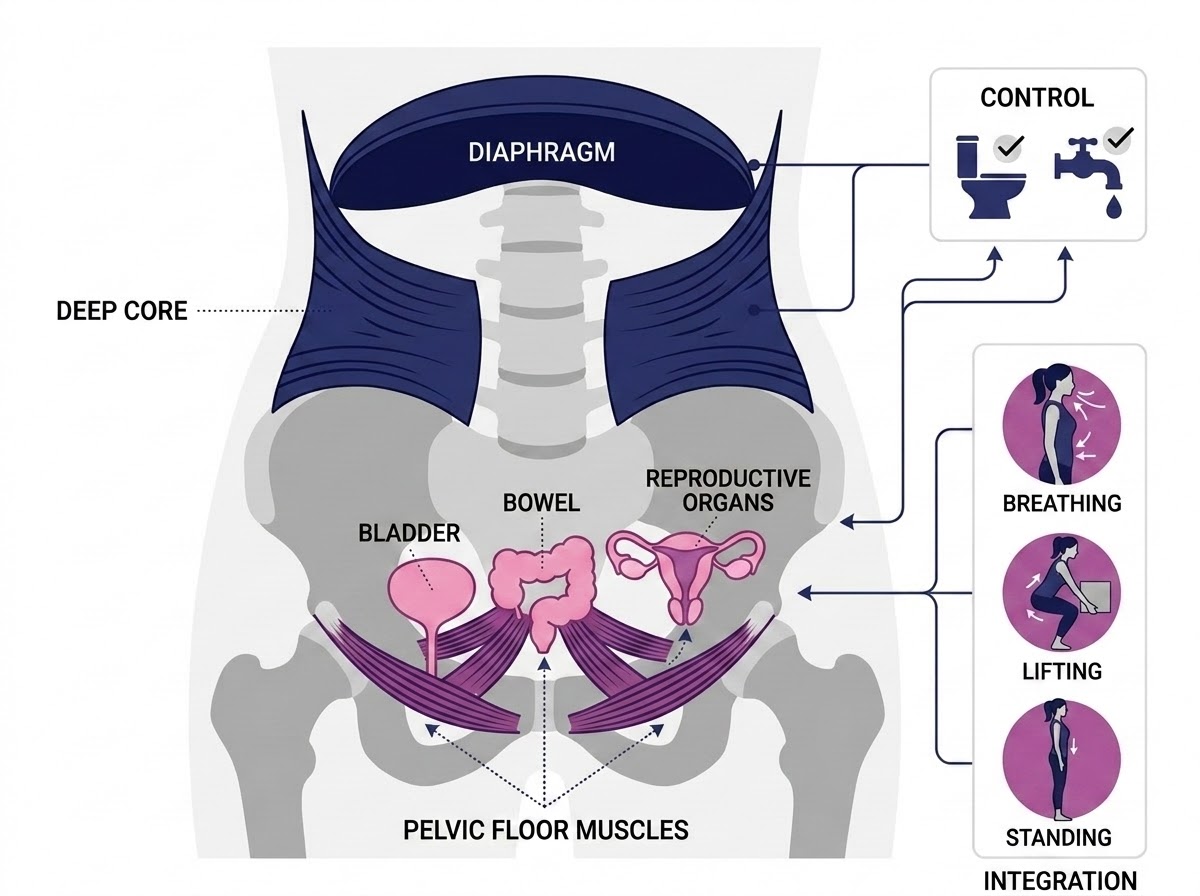
Like any other muscle group, it can have problems. It can be weak. It can be too tight. It can be uncoordinated, meaning the muscles fire at the wrong time or fail to relax when they should. Each of those causes different symptoms, and each needs a different plan.
This is why "just do your Kegels" is bad advice for a large share of people. If your pelvic floor is already too tight, squeezing it harder usually makes symptoms worse, not better. A Kegel is a tool, not a treatment plan, and it is the wrong tool for many patients.
General physical therapy and occupational therapy focus on the body more broadly, and at ASPIRE those disciplines are coordinated under one roof.
What Pelvic Health Therapy Treats
At ASPIRE, pelvic health therapy addresses:
- Urinary incontinence, including stress leakage with coughing, sneezing, or lifting, urge leakage with the sudden need to go, and mixed symptoms
- Pelvic pain and dyspareunia, meaning pain with intercourse
- Bowel dysfunction and constipation
- Diastasis recti and core weakness, often after pregnancy
- Pelvic organ prolapse, the feeling of heaviness or pressure
- Pelvic changes related to perimenopause and menopause
- Low back, hip, or SI joint pain connected to pelvic floor function
- Post-surgical pelvic rehabilitation
If your symptom is not on this list and you are not sure whether it fits, that is a reasonable question to ask on the phone before you book. Give us a call at (303) 963-5582.
Four Stages of Life, Four Different Conversations
Prenatal. Preparing the pelvic floor for birth, learning how to relax as well as engage those muscles, and managing pregnancy-related pelvic and low back pain while it is happening.
Postpartum. Recovery does not end at the six-week clearance visit. That appointment confirms tissue has healed. It does not evaluate whether your core and pelvic floor are working again. Many people are years past delivery when they finally get assessed, and progress is still very possible.
Active adults and perimenopause. This is the stage where people build workarounds. Emptying your bladder before every run. Skipping the trampoline with your kids. Avoiding certain lifts. Those adaptations feel small individually, but they add up to a life shaped around a treatable problem. Hormonal changes in perimenopause can also affect tissue quality and continence.
Older adults. Continence, prolapse management, and pelvic floor strength are directly tied to staying independent and confident in daily life.
Why an Occupational Therapist
Pelvic health at ASPIRE is led by Ellen Hiestand, a Pelvic Health Occupational Therapist.
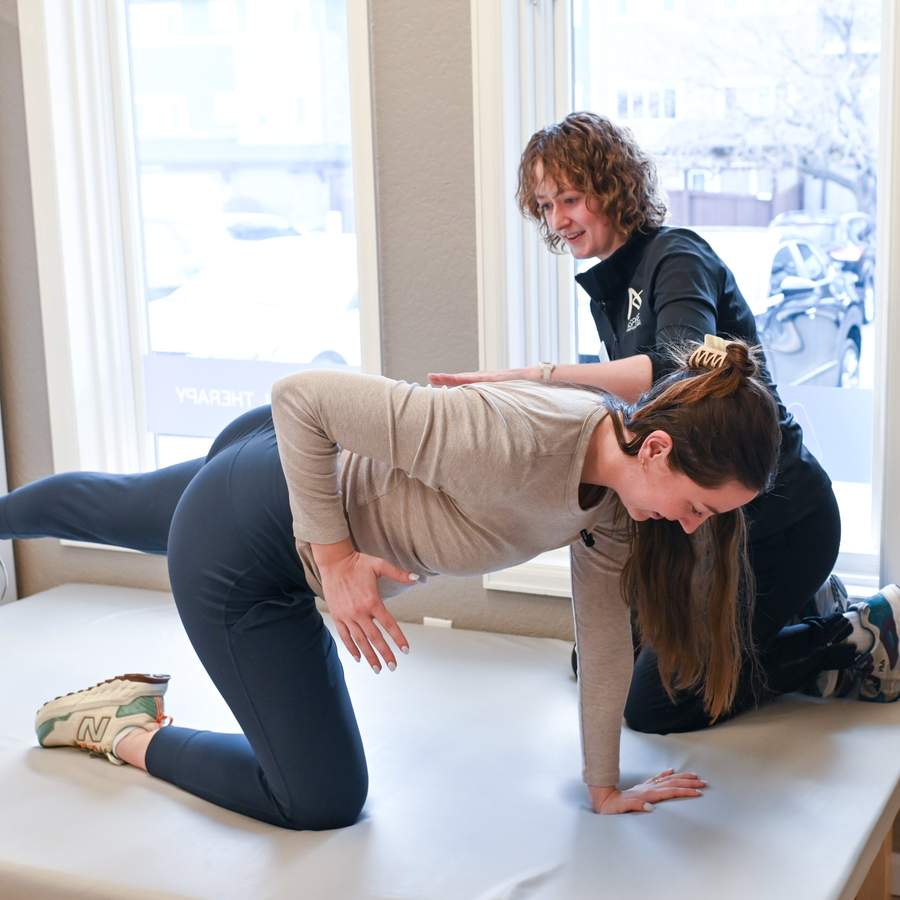
Occupational therapy is centered on function, meaning the actual activities that make up your day. That lens fits pelvic health unusually well, because pelvic floor symptoms are rarely just a muscle problem. They show up as the run you stopped taking, the meeting you sat through uncomfortably, the trip you planned around bathroom access.
Ellen takes a whole-body approach that combines manual therapy, targeted exercise, and education. The education piece matters more here than in most areas of therapy. Most patients arrive without a clear picture of how their own pelvic floor works, and understanding what is happening in your body is often what makes the home program stick.
The goal is to find the root cause rather than manage the symptom indefinitely. A pad is a reasonable temporary solution. It is not a treatment.
Insurance, Cash Rates, and Getting Started
ASPIRE accepts most major insurance plans. Call us before your first appointment and we will verify your benefits and walk you through what to expect.
For patients paying out of pocket, the rates are published rather than quoted after the fact:
- Initial evaluation: $180
- 60-minute session: $160
- 45-minute session: $125
- 30-minute session: $87
Colorado is a direct access state, which means you do not need a physician referral to start physical or occupational therapy. You can call and book. If you want the detail on how that works, we covered it here: Do I need a referral for PT in Colorado?
Some insurance plans still require a referral for coverage even though state law does not. Worth a quick check with your plan.
Serving Louisville, CO and Boulder County
Our outpatient clinic is at 1371 Hecla Dr, Ste E, Louisville, CO 80027, and we see patients from Superior, Broomfield, Lafayette, Erie, and the surrounding Boulder County communities.
Pelvic health therapy is part of our broader occupational therapy practice, so if your needs cross over into hand function, daily living, or post-surgical recovery, that care is available under the same roof.
Schedule your consultation online or call us today to book your appointment.